

Headingley Karate
|
|
|
Techniques
|
The techniques used in Shinseido are generally taken from the kata (forms) we practice.
The purpose of kata, in our view, is to teach principles rather than individual techniques.
As such, each kata movement can be seen as a multi-purpose tool.
Analysis of the kata movements is known as Bunkai and is the cornerstone of the practice of Shinseido.
Once you understand the principles a kata movement is teaching it is possible to use the movement in many different ways.
To understand this we can, for example, look at one of the first techniques found in the traditional Karate Kata, the so-called ‘Downward Block’ (sometimes called ‘Downward Sweep’ or Gedan-Barai).
The following pictures show just a few examples of how this simple movement can be used.
This technique can be practiced using different stances and whilst stepping in different directions.
The chief principle embodied in the downward sweep is one of pulling and pushing: one hand pulls up and back towards the hip while the other hand pushes down and forwards.
|
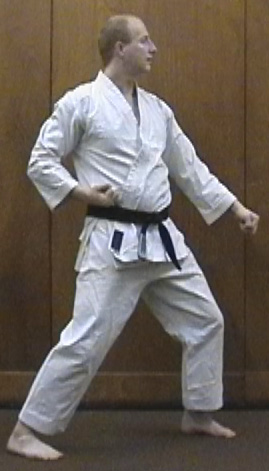
The end position of gedan barai - downward sweep
|
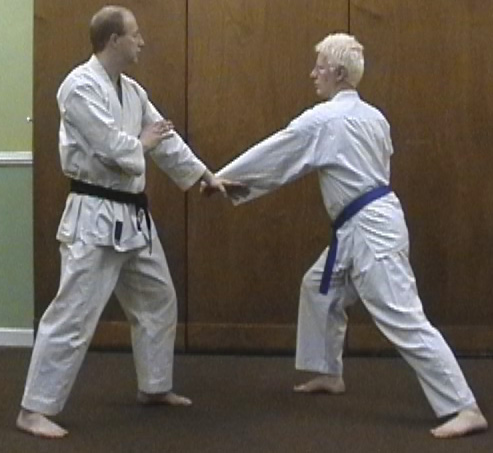
BridgingThe downward sweep is used simply to sweep a low attack away to one side. First one arm moves across to intercept the incoming limb. Next the other arm comes down and sweeps the limb away.At the same time the defender moves 'offline', making it easier to counter-attack and more difficult for the attacker to follow through with another strike. |
|
|
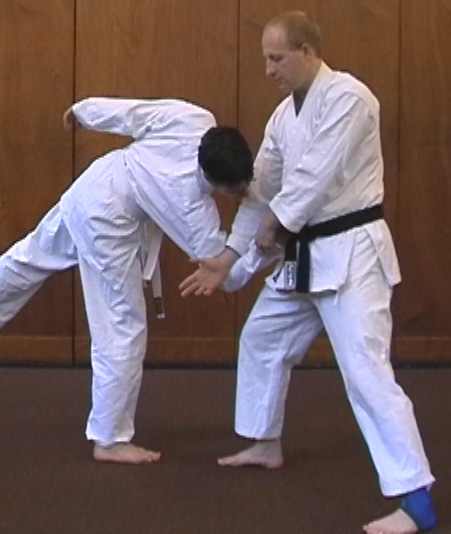
StrikingOne arm pulls on the attacker’s wrist whilst the other strikes down through a vital point (or kyusho) on the arm, in order to unbalance the attacker. |
|
|
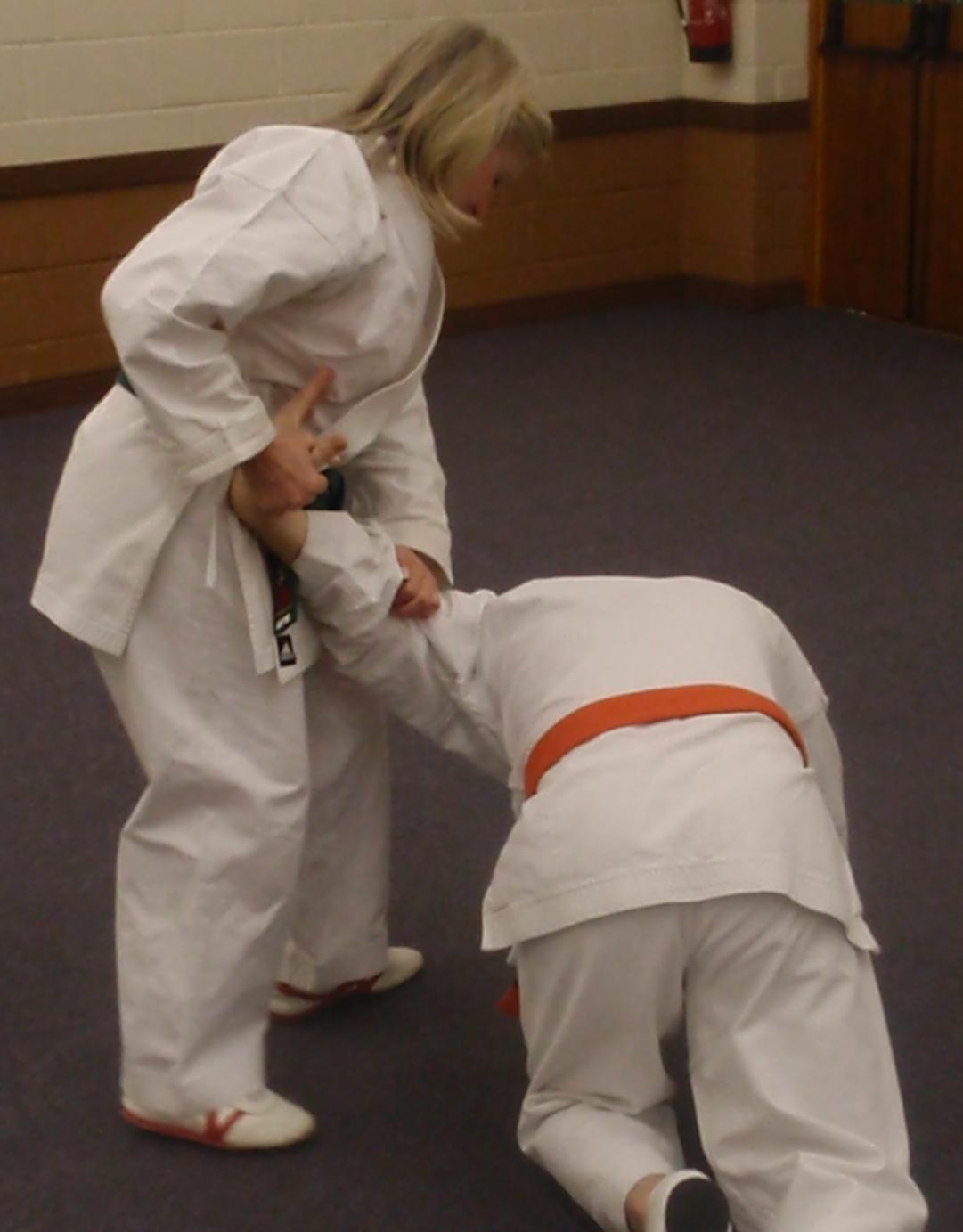
Joint-lockingThe downward sweep is used to apply an arm-bar (which puts pressure on the elbow joint. The assailant must either bend down or have their elbow dislocated). One hand pulls the assailant’s hand to the hip (in this instance also locking the thumb), the other arm pushes down on the assailant’s upper arm (the triceps tendon just above the elbow). Here the front leg is also used to apply pressure in oder to control the assailant's arm. |
|
|
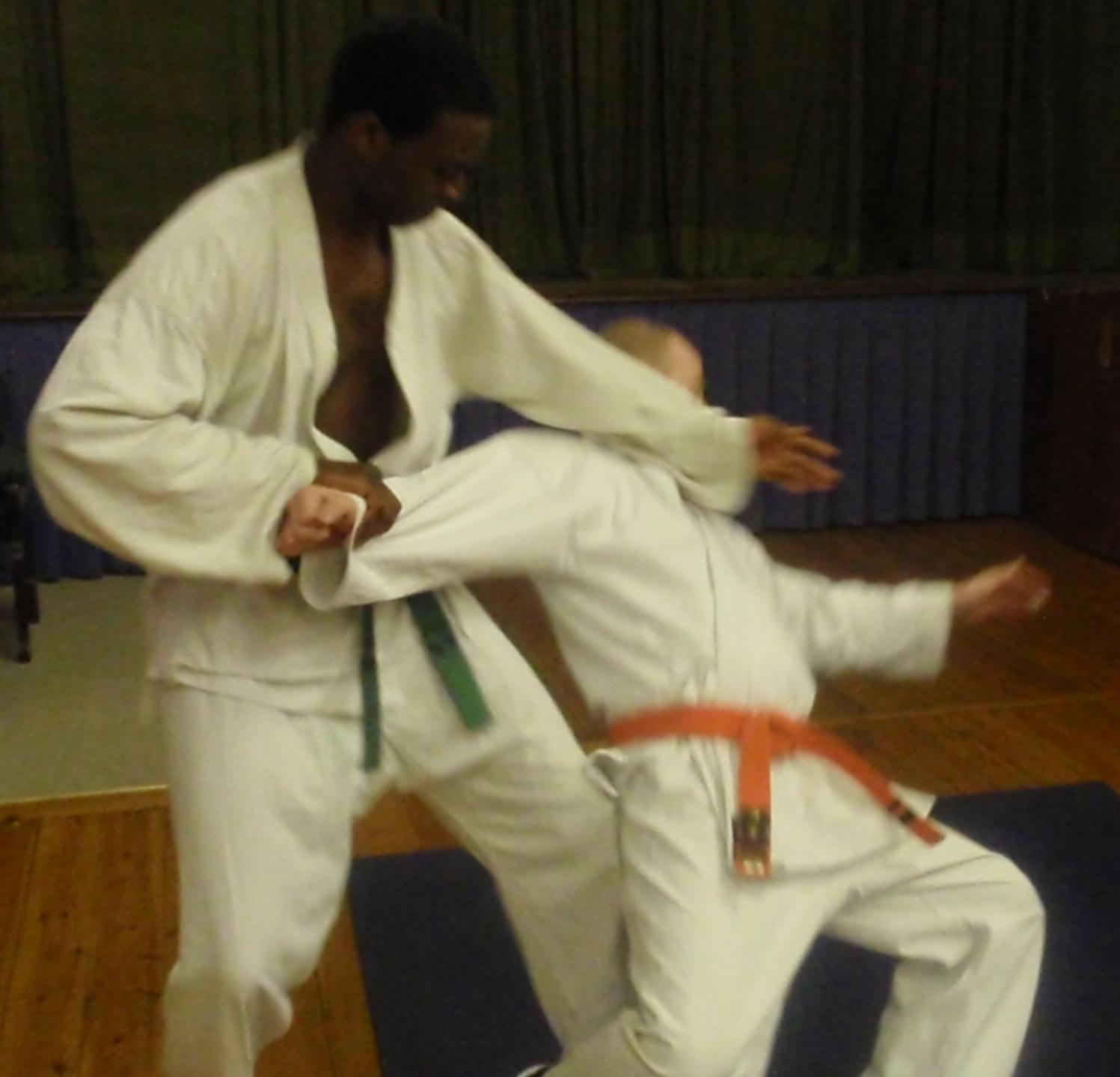
ThrowingThe defender has managed to capture the attacker's wrist and step behind the attacker’s leg. One hand pulls while the other presses across and down on the assailant’s torso in order to knock them down. |
|
|
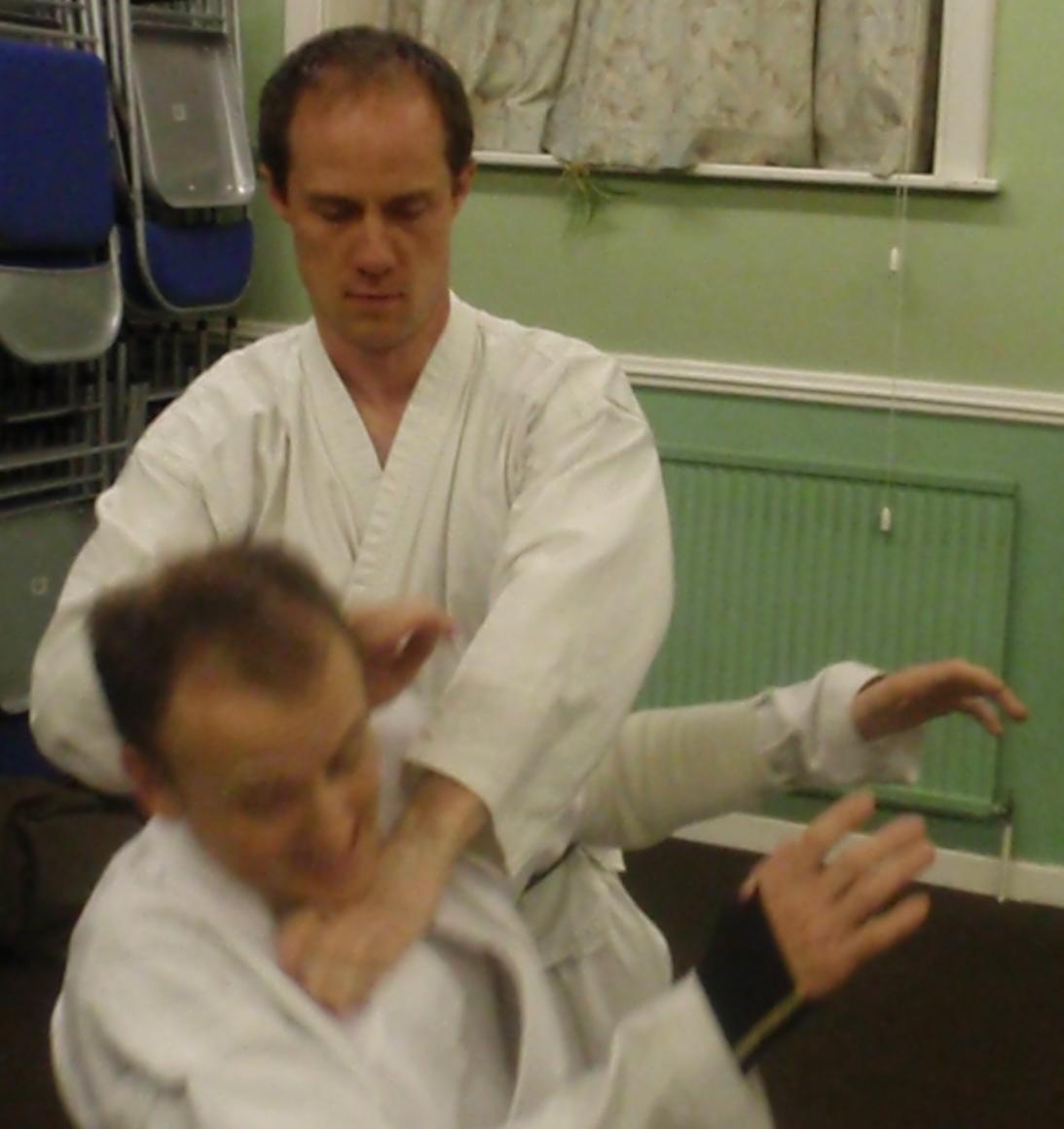
ChokingThe defender pulls the attacker's lapel while pushing down through the neck with the other hand, while taking the attacker down to the ground. In this instance the takedown and the choke augment each other's effectiveness. |
|
|
|
To learn more come along for a FREE trial lesson. |