

Headingley Karate
|
|
|
Shinseido for Beginners
Learn effective techniques that work
That may seem an obvious thing to say, surely the same can be said about all martial art techniques?
Sadly the answer to this is...No! To understand why, we need to look at how and why modern martial arts have developed. Over time many martial arts have moved away from their practical roots. Instead they have focussed on other qualities, such as sport,
athleticism or spiritual development. In fact, many of the martial arts that are popular now were created deliberately to promote these 'non-martial' goals. Often these developments are at odds with the goal of self-defence.
Shinseido has no sporting component. While it is concerned with self-development, this is a secondary goal. First and foremost, we strive to ensure that all techniques are fit for the purpose of self-defence.
Read more on the origins of modern martial arts...
Keep it Simple
In the first 3 months or so of Shinseido training we aim to keep things as simple as possible for you. The techniques that you learn are specially chosen because:a. they work and
b. they're (relatively) simple to perform.
Read more on the syllabus for new students...
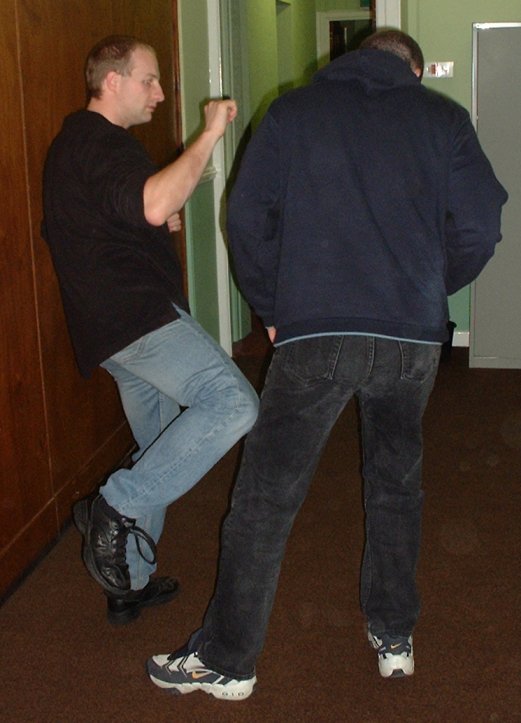
Knee strike: the easiest kick to perfect and probably the most useful
|
Once this initial phase of training is complete students then start to build the foundations for more advanced study. This requires patience and hard work, but - for those who persist - results in the development of excellent self-defence skills.
Learn to avoid violence and de-escalate confrontations
In martial arts training it is usually assumed that a fight starts when two opponents 'square off' against each other. They stand an agreed distance apart and the 'fight' starts by mutual agreement. Real violence rarely happens in this way. Instead, a verbal confrontation gets out of hand and results in one person lashing out at the other. Or the attack appears to come out of the blue without warning.Shinseido is not about fighting. It is about avoiding violence and, if that fails, doing what is necessary to survive violent assault. Shinseido students learn to project confident, assertive, but non-confrontational body language. This approach has been
found to prevent most confrontations from escalating into violence in the first place. If things do get out of hand, the same body language puts you in the best position to be able to deal with a violent assault.
But what about the 'out of the blue' assaults? Well, in reality an assault is very rarely totally out of the blue. Its more likely that you just failed to spot the signs that it was coming. The same body language described above, combined with appropriate
awareness skills, will prevent most of these kind of assaults. And those it doesn't prevent? Well, with practice you should at least see them coming and be better prepared to deal with them.
Training geared towards you
Adults of all ages and levels of physical fitness/ability can practice Shinseido. None of us can be fit and strong throughout our whole lives. This has to be taken into account in your training, so Shinseido techniques do not require great flexibility or strength in order to work.
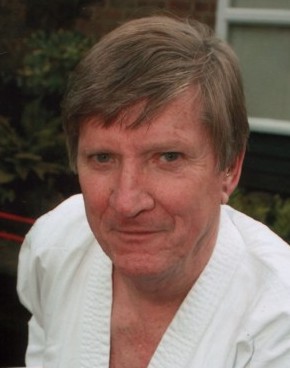
John Clark of the Sevenoaks club achieved his black belt in Shinseido at the age of 70
|
Of course, the young should train in a vigorous manner, but it would be foolish to expect older students or those with health problems to practice in the same way. Each Shinseido student is encouraged to reach their full potential, but account is taken of
each individual's needs and possible limitations. If you wish to discuss any particular health concerns with the instructor prior to beginning training please contact Mike (see bottom of this page).
Have fun and get fitter
Shinseido training takes place in a less formal, more relaxed atmosphere than many oriental martial arts. This is not to say that we don't take our training seriously - we do - but we also believe that the learning process should be fun. If you enjoy your training then you're more likely to keep it up. And so your martial skills and level of fitness will naturally increase over time.
Discipline mind and body
Martial art training progressively conditions and disciplines the body. In addition to becoming physically stronger your coordination and physical control will also improve. A natural side-effect of this process is that the mind becomes stronger and more self-disciplined too. So your training can have a positive influence on other aspects of your life, increasing your self-confidence and willpower.
How to get involved
To start training just come along to watch or take part in a class. Click here for details of your FREE trial lesson.Alternatively, if you have any questions about Shinseido training just email the instructor at mike@headingleykarate.org or call 07939 506340.